How Basketball Club Teams in San Diego Strengthen Basketball Fundamentals
Basketball development has a way of getting misunderstood, especially once the conversation turns to travel schedules, tournament exposure, rankings, and social media clips. Parents see packed gyms and highlight videos. Players see jerseys, weekend games, and the excitement of competing against unfamiliar teams. Coaches, at least the good ones, tend to see something else entirely. They see repetition. They see footwork. They see the difference between a player who can score in a workout and a player who can hold up in live action when the pace rises and space disappears.
That is where club basketball matters most. At their best, basketball club teams in San Diego do not simply give players more games. They give them more structured chances to build the habits that make every later skill possible. Stronger balance on the catch. Better timing on a help rotation. Cleaner passing angles. More disciplined closeouts. A reliable first step that is grounded in posture, not just speed. Fundamentals are not glamorous, but they are what travel with a player from one age group to the next.
San Diego is a particularly interesting setting for this kind of development. The area has year-round playing weather, deep youth participation, strong school programs, and a mix of athletic profiles. Some players arrive polished and technically sound. Others arrive raw, quick, explosive, and still figuring out how to translate their athleticism into useful basketball. Club environments can bridge that gap when they are run with discipline and patience.
Why fundamentals remain the dividing line
At younger ages, natural advantages can hide weak habits. A taller middle school player can get away with standing upright, catching the ball late, or relying on reach around the rim. A quick guard can survive by racing past defenders who have not yet learned angles. That changes fast. By the time competition becomes more serious, every weakness gets exposed.
The players who continue to improve are rarely the ones who only learned moves. They are the ones who learned structure. They know how to pivot under pressure without traveling. They can jump stop in traffic and stay on balance. They pass on time, not just accurately. They defend with chest position rather than lunging for steals. The jump shot, the handle, and the scoring package matter, but the floor under those skills is built from fundamentals.
Club basketball offers something school seasons often cannot, which is time. High school and middle school teams have immediate competitive demands. Coaches need to install systems, prepare for opponents, and manage rotations in a compressed window. Club programs, when organized well, can work across a longer stretch of the year. That gives coaches the chance to revisit the same movement patterns over weeks and months instead of hoping they stick after a few practices.
This is where the best Basketball Club Teams San Diego families seek out tend to separate themselves. They are not just running players through drills to fill time. They are layering skills in a deliberate sequence. A coach might spend ten minutes on stance and first-step mechanics for defense in September, revisit those same details in transition drills in October, then reinforce them through shell work in November. That kind of continuity is how habits become instinct.
The San Diego advantage, and the trap that comes with it
San Diego has an unusually active basketball ecosystem. There are local leagues, club circuits, private training options, open gyms, school teams, and enough nearby competition to keep weekends full. For motivated players, that is a gift. For families, it can also become a distraction.
The trap is volume without purpose. More basketball does not always equal better basketball. I have seen players spend months bouncing from game to game while their stance remains high, their off-hand stays inactive on drives, and their defensive positioning never improves. They are active, but they are not developing. They are accumulating minutes without upgrading the skills that determine long-term success.
The strongest club environments in San Diego resist that temptation. They understand that tournament schedules should support development, not replace it. A weekend with four games can be useful if it gives coaches a chance to test habits under pressure. It becomes counterproductive when every practice before and after turns into a scramble to prepare for the next bracket.
Good coaching in this setting requires judgment. A player who struggles with decision-making may need fewer set plays and more read-based small-sided games. A player with strong instincts but poor shooting mechanics may need a temporary reduction in freedom to launch contested shots so the jumper can be rebuilt. A team that wins because it presses and outruns less organized opponents might still be failing its players if half of them never learn how to play in the half court.
Repetition with feedback, not repetition alone
People often say fundamentals are built through repetition. That is true, but only partly true. Repetition without correction simply hardens mistakes. If a young player takes five hundred shots with a narrow base, a drifting guide hand, or inconsistent dip timing, the workout can make the problem worse.
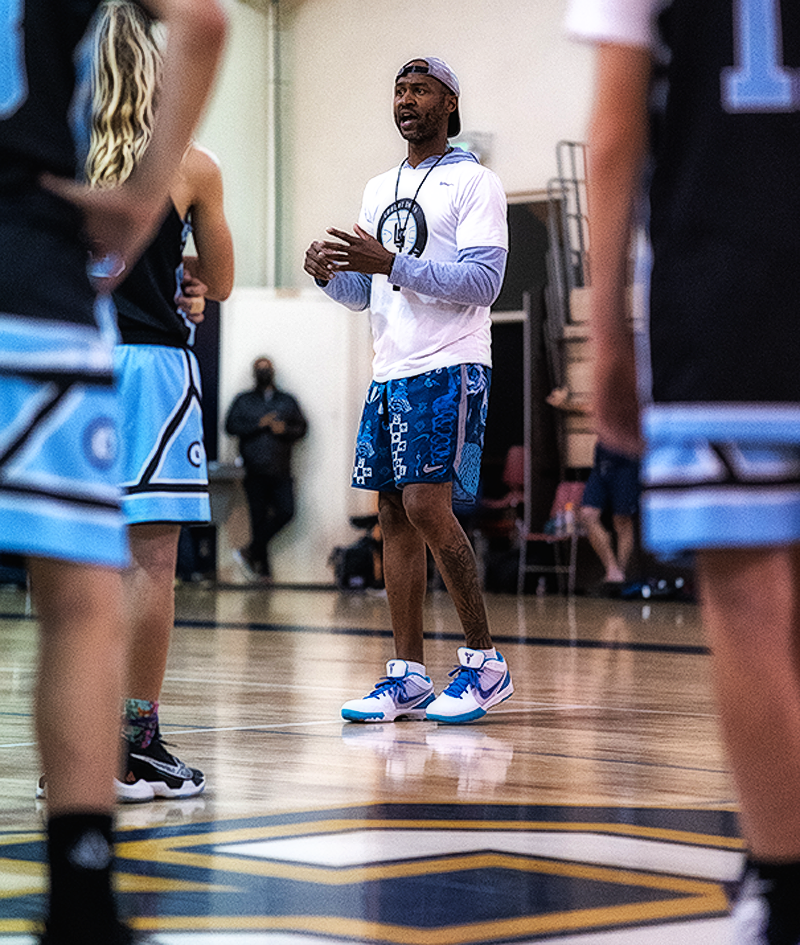
Club coaches who genuinely teach fundamentals understand the value of immediate, specific feedback. They stop a drill for body position. They ask a player to repeat a defensive slide because the first movement opened the hips too early. They demand that a pass be delivered to the outside hand. These details seem small from the stands. They are enormous on the court.
The best sessions tend to feel demanding without being noisy. You hear coaches cueing simple, repeatable ideas. Chin over toes. See both, ball and man. Catch loaded. Land balanced. Finish high off two. Hit first, then pursue the rebound. That language matters because it gives players a mental handle on physical actions.
San Diego club teams that do this well also tend to train fundamentals in context. Instead of isolating a skill and leaving it there, they move it into decision-making. A player might begin with stationary passing, progress to passing off a live dribble, then advance to making the same pass while reading a help defender in a 3-on-3 game. That is how a technical skill becomes a basketball skill.
Footwork is the quiet engine of development
If I had to pick one area that most clearly shows the quality of a youth program, it would be footwork. Not because it is the only thing that matters, but because footwork exposes whether a coach is teaching the game from the ground up.
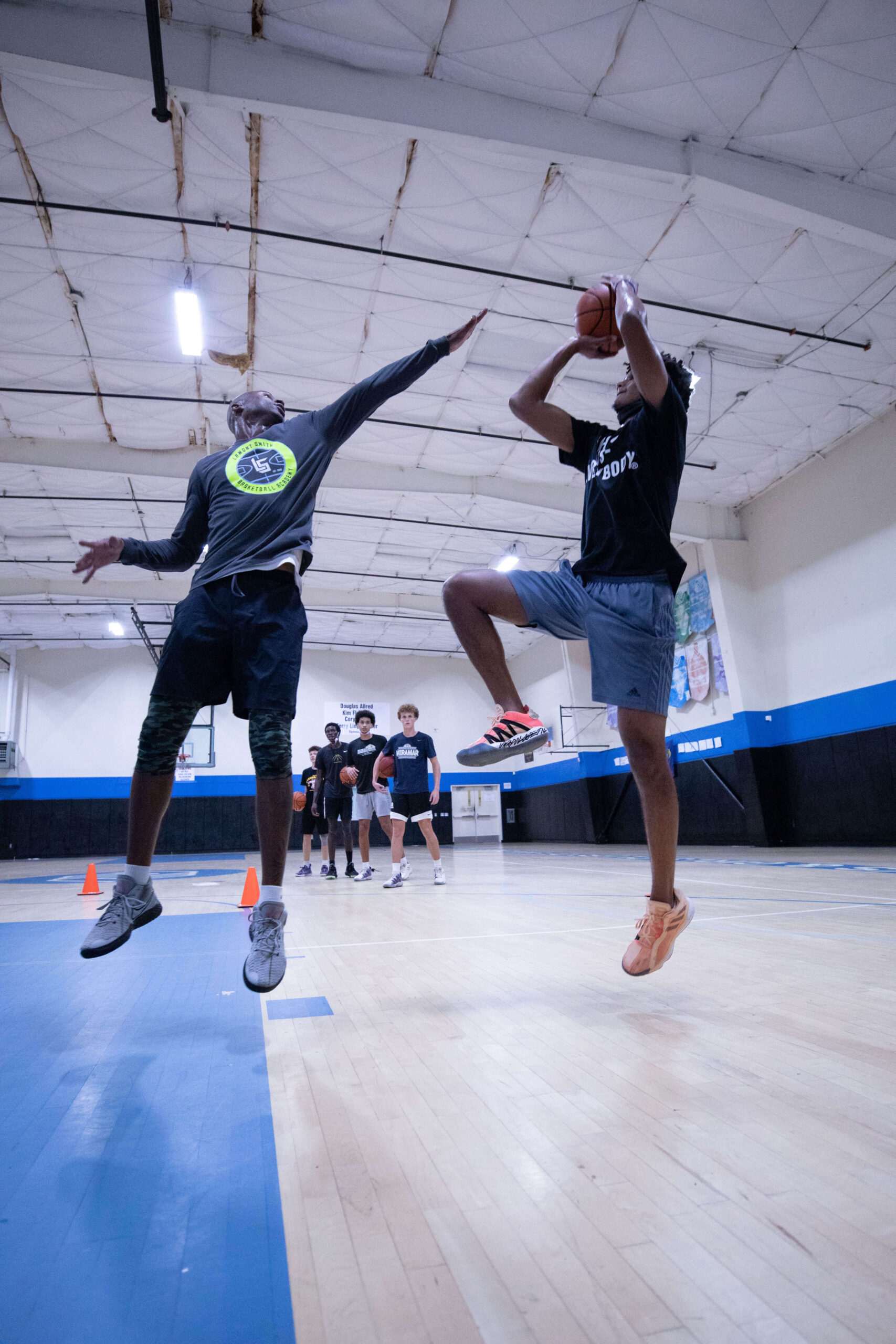
Watch how a team catches the ball on the wing. Do players arrive on balance, ready to shoot, drive, or pass? Or do they need an extra reset dribble because the feet were never prepared? Watch how they stop in the lane. Are they jump stopping through contact, or are they fading sideways and hoping for whistles? Watch how they close out. Are they chopping their feet under control, or sprinting past the play and opening a driving lane?
In strong club settings, footwork gets taught everywhere. It shows up in shooting. It shows up in transition defense. It shows up in post entries and pivots. It even shows up in rebounding, where the first battle is usually won with contact and angle before the ball is ever secured.
San Diego players often bring pace and confidence. Those are assets. But pace without control can become sloppiness, and confidence without footwork can lead to turnovers against better teams. Club coaches help players harness those traits by teaching them how to play fast while staying balanced. That is a subtle distinction, but it changes everything.
Ball handling is more than dribble moves
Ball handling gets marketed as creativity, and there is nothing wrong with creativity. The problem comes when players equate advanced dribble combos with actual control. Real ball handling is about command of tempo, body position, and decision-making. It is about keeping the dribble alive under pressure, changing direction without exposing the ball, and arriving where you intend to arrive.
The better Basketball Club Teams San Diego offers usually train ball handling as part of a complete offensive foundation. Players learn how to use their off arm legally to shield. They learn how to get shoulder-to-hip on a defender rather than dancing east-west. They learn how to come off a ball screen tight instead of drifting wide. They learn when one hard escape dribble is more useful than three decorative crossovers.
There is also a defensive side to this conversation. Strong ball handlers often come from facing disciplined on-ball pressure in practice. When teammates crowd space, test weak hands, and force changes of speed, everybody improves. A soft practice environment can produce confident dribblers who unravel the moment a long, active defender gets into their body.
One of the more revealing habits in youth basketball is whether players can pick up the dribble without panicking. Club teams that teach poise create guards who can stop, pivot, protect the ball, and see the floor. That sounds basic, but it separates players constantly once game speed rises.
Shooting development needs patience and honesty
No fundamental gets rushed more often than shooting. Families want quick visible results, and players want range before they are ready for it. But sound shooting mechanics usually improve through careful, sometimes boring work. Base. Balance. Sequencing. Arc. Follow-through. Shot selection. The process is less dramatic than people hope.
Good club coaches are honest about this. They understand that a player may need to rebuild mechanics before percentages jump. They also know that not every miss signals a form problem. Sometimes the issue is foot preparation. Sometimes it is lower-body strength. Sometimes it is poor shot quality caused by late reads or rushed catches.
In San Diego, where players can train nearly year-round, the opportunity for improvement is huge. So is the temptation to skip steps. A younger player who starts hunting deep threes before mastering rhythm from shorter range may end up grooving compensations that are difficult to undo later. A club coach with standards will scale the progression properly. They will demand clean makes up close, then extend range as strength and consistency allow.
Just as important, they will teach players how to shoot in real game conditions. That means relocating after passes, shooting off movement, rising after quick stops, and understanding time and score. A pretty warmup jumper means little if the feet fall apart after a hard cut or if the player cannot recognize when the defense is inviting a better pass.
Defense is where fundamentals become visible
Offense gets attention. Defense reveals discipline.
You can usually tell within a few possessions whether a club team prioritizes defensive fundamentals. Do players talk early, or only after a breakdown? Do they know where to send the ball? Can they stunt and recover under control? Do they box out on the weak side when the shot goes up? These habits rarely appear by accident.
Defense is also one of the clearest areas where club basketball strengthens players who may not yet be primary scorers. A player who learns how to guard the ball, rotate on time, rebound in traffic, and sprint back in transition becomes valuable at every level. Those contributions travel. Scoring roles can change from team to team. Defensive habits tend to hold.
The strongest coaches in this space avoid teaching defense as pure effort. Effort matters, obviously, but effort without technique creates fouls and chaos. Proper stance, angles, hand discipline, timing, and communication are all teachable. A club setting gives coaches repeated chances to teach them.
A lot of young athletes in San Diego are capable of becoming disruptive defenders because they have the quickness and competitiveness for it. What they often need is refinement. They need to learn when to contain instead of reaching. They need to understand gap responsibility. They need to trust team defense rather than chasing every steal. Once those pieces click, their athletic tools become much more useful.
Game experience matters when it is tied back to teaching
Tournament play can sharpen fundamentals if coaches treat games as feedback, not just outcomes. The best postgame conversations are often precise and unspectacular. Not "we need to want it more." More like, "Our weak-side defenders lost vision in the second half," or, "We turned corner catches into extra dribbles and let the defense recover."
That kind of review is where club teams can be very effective. Players feel the consequences of habits immediately. A lazy closeout gives up a baseline drive. A poor pivot leads to a tie-up. A soft pass gets deflected. When coaches revisit those moments in practice and rebuild the underlying skill, the learning sticks.
There is real value in playing different styles of competition as well. One weekend, a team might face a physical group that punishes loose ball protection. The next weekend, they may play a disciplined half-court team that exposes weak screening angles and impatient shot selection. Those contrasts force players to apply fundamentals in varied settings.
Still, game volume should not crowd out practice quality. If a club calendar becomes all travel and no teaching, development usually stalls. Young players need recovery, reflection, and plain old repetition between competitions. Families sometimes underestimate this. The schedule that looks busiest on paper is not always the one producing the best basketball growth.
What parents should look for in a club program
Choosing a club team can feel overwhelming because so much of the marketing sounds the same. Every program talks about development. Not every program structures its week around it. In practical terms, parents should pay attention to what happens in the gym, not just what gets posted after the fact.
A few signs are usually telling:
- Coaches correct details consistently, not only effort or attitude.
- Practices include live decision-making, not just lines of isolated drills.
- Players across the roster show similar habits in spacing, stance, and communication.
- Game mistakes are addressed with teaching points, not only substitutions.
- Improvement is visible in role players, not just the most talented scorers.
That last point matters. A club program that truly teaches fundamentals lifts the whole roster. The eighth and ninth players become steadier passers, more connected defenders, and more reliable rebounders. Development is not reserved for the star guard.
The role of role definition
One underappreciated way club teams strengthen fundamentals is by clarifying what a player actually needs. Not every athlete benefits from being asked to do everything at once. Sometimes a young wing needs to focus on defending multiple positions, making one-read drives, and becoming a dependable catch-and-shoot option. Sometimes a point guard needs to narrow attention to pace control, paint touches, and ball security before exploring more advanced scoring reads.
Role definition is not labeling a player permanently. It is prioritizing development. Good coaches know when to simplify so players can improve core habits under manageable demands. Once those habits are stable, the role can expand.
This matters in competitive San Diego basketball because players are often juggling school teams, private trainers, and https://www.instagram.com/coachmontysmith/ club systems with different expectations. A smart club coach helps organize the chaos. They identify the next few essentials and hammer them until progress becomes obvious. That discipline keeps development from becoming random.
Fundamentals also grow through accountability and culture
Technique alone does not hold up without standards. Players improve faster in environments where details are expected every day, not requested occasionally. That includes arriving ready, listening during teaching moments, competing in drills without cutting corners, and accepting correction without defensiveness.
Culture sounds abstract until you see its effect on the floor. Teams with strong habits usually have practice environments where players understand that every rep counts. They box out in 3-on-3 games. They sprint into spots in shell drill. They make the extra pass in scrimmages instead of turning every possession into an audition. Over time, that environment shapes basketball instincts as much as any formal drill does.
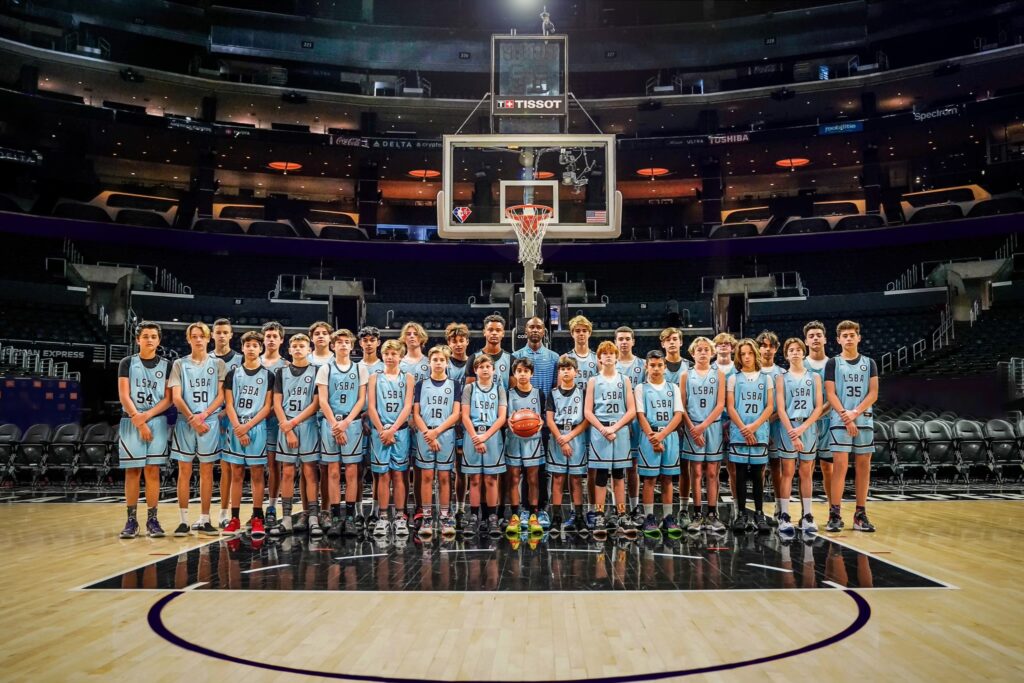
Some of the best club teams in San Diego also create peer accountability well. Older or more experienced players model communication and discipline. Younger players absorb the pace and standard. That is especially useful in mixed-development groups where raw athletes can learn from polished ones, and skilled but less physical players can toughen up by competing daily.
Long-term development beats short-term applause
There is always pressure in youth sports to chase visible success. Wins look good. Stats look good. Trophies make the season feel justified. But basketball is full of players who peaked early because their environments rewarded production without repairing weaknesses.
The club teams that make a real difference take the opposite approach. They understand that a fourteen-year-old does not need to look finished. He or she needs to get better. Sometimes that means living with short-term mistakes while a player learns to make the right read. Sometimes it means changing a shot that used to go in often enough. Sometimes it means asking a scorer to defend with real commitment before expanding offensive freedom.
That can be frustrating in the moment, especially for families comparing results. Yet over a few years, the payoff becomes clear. The players who were taught to move correctly, see the floor, defend without fouling, and play from balance tend to keep climbing. Their games transfer. Their confidence becomes more durable because it rests on skills that survive pressure.
For anyone evaluating Basketball Club Teams San Diego has to offer, that is the central question to ask. Is this program helping players look good this weekend, or is it building the habits that will still matter two, three, and five years from now? The answer shows up in footwork, spacing, defensive posture, passing rhythm, and the calm a player carries when the game gets fast.
Fundamentals are not flashy, but they are the closest thing basketball has to truth. Club teams that respect that truth give young players something far more valuable than exposure. They give them a game that holds together when competition gets harder, roles change, and talent alone is no longer enough.
Lamont Smith Basketball Academy
888 Clairemont Mesa Blvd Suite T-2, San Diego, CA 92123
(619) 639-8778
FAQ About Basketball Club Teams San Diego
How can a player join an LSBA club team?
Players are evaluated during practices so the coaching staff can recommend an appropriate team and development level. Families should contact the academy to confirm current openings and evaluation details.
Are club teams available for newer basketball players?
Yes. LSBA describes multiple levels, including a developmental option for newer players as well as more competitive teams for athletes with prior club experience.
What do LSBA club team practices emphasize?
Practices emphasize basketball fundamentals, team defense, structure, communication, and player development. The specific focus may vary according to the team and experience level.
Do all LSBA teams travel?
Travel expectations vary by level. Some teams focus on local competition, while advanced teams may participate in tournaments elsewhere in Southern California or beyond. Families should confirm the current schedule before enrolling.