Basketball Club Teams San Diego and the Pursuit of Excellence
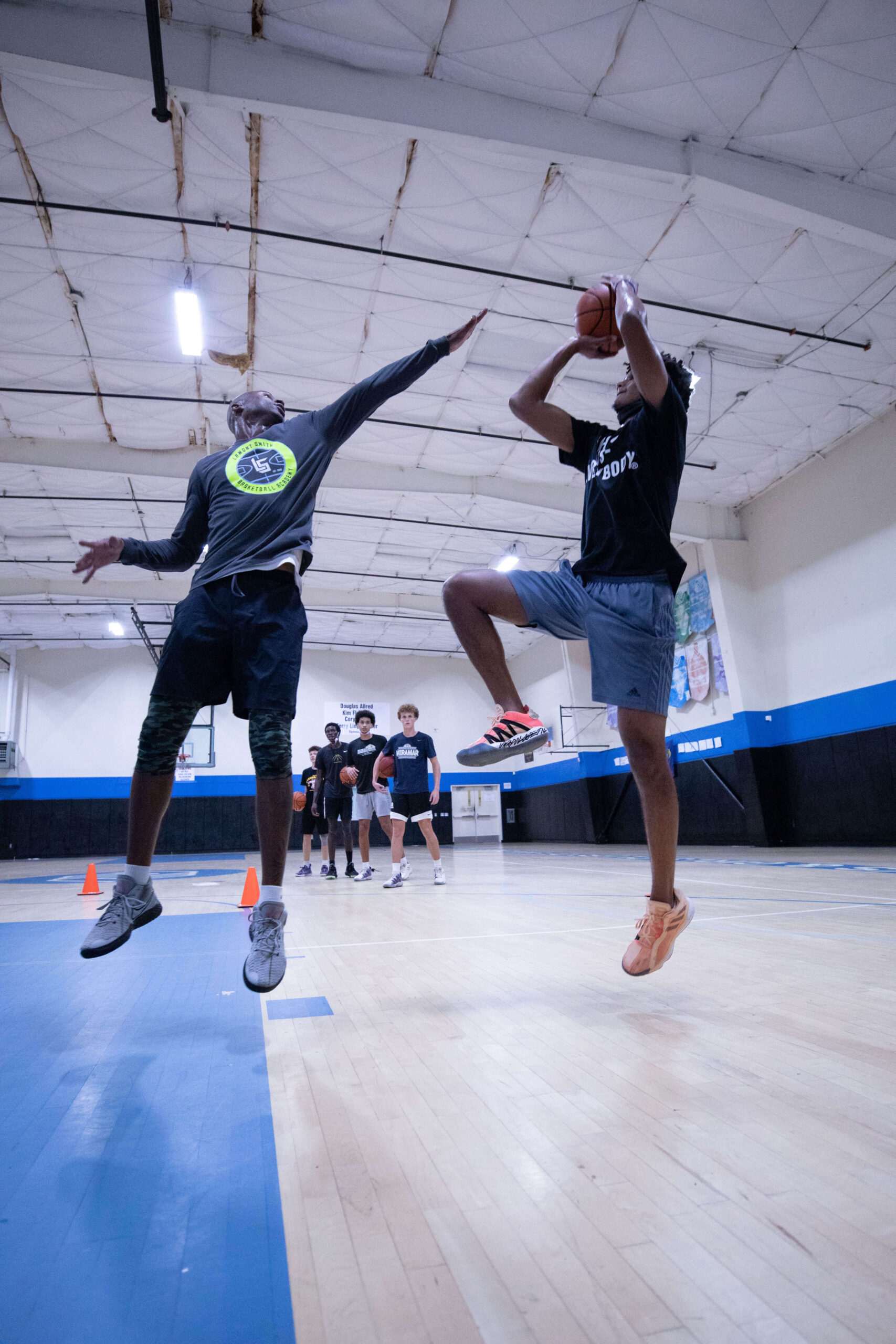
San Diego has always been a fascinating place to watch https://trevorikch826.urbanvellum.com/posts/basketball-club-teams-san-diego-that-prioritize-academic-success young basketball players grow. The climate allows for year-round training, the county is large enough to support real competitive depth, and the local sports culture has an unusual mix of laid-back confidence and fierce ambition. That combination creates a fertile environment for club basketball, but it also makes the landscape crowded, noisy, and sometimes hard to read. Families hear promises. Players chase exposure. Coaches juggle development, wins, scheduling, and expectations. Somewhere inside all of that, the best programs keep returning to the same question: what does excellence actually look like?
The answer is rarely as simple as a trophy case or a social media feed full of highlights. In youth basketball, excellence is built in quieter ways. It shows up in footwork that gets sharper over six months. It appears in defensive habits that hold up against stronger opponents. It is visible when a team that loses by 18 in April comes back in August and competes possession for possession against that same opponent. Real progress has a texture to it. You can see it in body language, communication, spacing, decision-making, and resilience.
That is why conversations about Basketball Club Teams San Diego deserve more nuance than they usually get. The city and surrounding communities offer genuine opportunity, but not every opportunity is equal. Some teams are built to win now. Some are built to teach. A few can do both. Knowing the difference matters.
What club basketball means in San Diego
Club basketball in San Diego sits in a space between school ball and pure skills training. It gives players a place to compete outside the school season, often with more games, more travel, and more exposure to different styles of play. For many athletes, club basketball is where they learn to adapt. High school teams may run a single system with a familiar group. Club teams force players to face unfamiliar defenses, unusual matchups, compressed schedules, and coaches who make quick evaluations.
That environment can be healthy. It can also be chaotic.
A Saturday in the local club circuit might involve an early pool play game in one gym, a bracket game in another gym 30 minutes away, and a final matchup against a team with length and pace your group has not seen before. Players learn to manage dead legs, foul trouble, nerves, and momentum swings. They also learn whether their fundamentals travel. A smooth scoring night in practice means very little if the player cannot create space against pressure or rotate properly in transition defense.
San Diego’s geography adds another layer. There is talent spread across North County, East County, South Bay, and the central corridor. Different neighborhoods feed different schools, and different schools shape different basketball identities. Some areas produce guards with polished ball skills. Others produce rangy wings and physical forwards. When club teams bring those players together, the strongest programs do more than stack talent. They build coherent units.
Excellence starts long before tournament season
Parents often first evaluate a club team by asking practical questions. How many tournaments? Which circuit? What is the travel schedule? Who has played in college? Those questions are reasonable, but they do not get to the heart of developmental quality. The better question is what happens on a random Tuesday evening, when there are no spectators and nothing glamorous about the work.
A serious club practice should reveal the program’s philosophy quickly. You can tell a lot by whether the first 20 minutes are organized, whether players are being corrected with precision, and whether drills are connected to real game situations. Good coaches are not just filling time. They are solving basketball problems in sequence. If a team struggles with weak-side tagging, closeout discipline, or getting into half-court offense under pressure, practice should address those issues directly.
That sounds obvious, but many youth teams drift toward convenience. They scrimmage too much, explain too little, and mistake activity for progress. Players leave sweaty and tired, yet unchanged. The strongest Basketball Club Teams San Diego programs tend to be more deliberate. They teach pace. They rep details. They revisit concepts until they become habits.
One of the most overlooked markers of excellence is how a coach handles the middle of the roster. Every team has its leading scorer and its obvious anchor. The real test is what happens with the eighth player, the raw athlete, the late bloomer, or the undersized guard who needs six months of patient teaching. Programs committed to development invest in those players too. They do not simply use them as practice bodies.
The San Diego advantage, and its hidden pressure
There is a reason families are drawn to the local club scene. San Diego offers quality facilities, access to strong competition in Southern California, and a broad network of trainers, school coaches, and former players who remain connected to the game. A talented player can get meaningful repetitions here without needing to relocate, and that matters.
At the same time, proximity to larger basketball markets creates pressure. Los Angeles and Orange County loom over every Southern California conversation. That can push San Diego programs in useful ways, raising standards and demanding better preparation. It can also tempt organizations into shortcuts. Some begin chasing branding before substance. Others over-schedule tournaments in pursuit of legitimacy, leaving players with game volume but not enough developmental time.
The players feel this tension more than adults realize. Many of them are trying to answer several questions at once. Am I good enough? Should I play up an age group? Do I need a bigger name program? Is my role here helping me or limiting me? Those are not abstract concerns. They shape confidence, patience, and long-term growth.
A veteran coach can usually spot when a family has become too focused on optics. It often shows up in the language around opportunity. More exposure, more travel, more elite branding. Those things can matter, but they are only useful if the player is ready for them. A sophomore guard who cannot consistently make the right read off a high ball screen does not need a more expensive tournament. He needs repetitions, accountability, and film study. A forward who avoids contact around the rim does not need a flashier uniform package. She needs strength work and live finishing under pressure.
What good coaching actually looks like
Great youth coaching is rarely loud or theatrical. It is specific. It gives players a framework for understanding the game while still demanding competitive edge. The best club coaches in San Diego do several things well at once. They teach skill within team concepts. They hold standards without humiliating players. They understand that development is not linear.
A strong coach also knows when to simplify. Younger teams, especially at the middle school level, can drown in terminology. It is easy to sound sophisticated and leave players confused. The better approach is to identify the habits that travel across every level of basketball. Sprinting back in transition. Meeting passes. Jump-stopping in traffic. Communicating on defense. Reading help. Seeing the next pass before making the first one. Those habits create players who can function in almost any system later.
I once watched a local club coach spend nearly 25 minutes on closeouts and second effort. To an outsider, it might have looked repetitive. To anyone who understands youth basketball, it was a masterclass in priority. He knew his team was athletic enough to score, but not disciplined enough to string together stops against better competition. Two months later, that same team still had offensive droughts, but they had become much harder to beat because their defensive floor had risen. That is coaching with vision.
Good coaching also includes restraint. Not every mistake needs a lecture in the moment. Some corrections are best made in film. Some are better learned through consequence. If a player misses a rotation and then sees a wide-open corner three go in, that lesson can stick more deeply than a shouted instruction. The finest coaches know when to step in and when to let the game teach.
Families should evaluate fit, not just reputation
In every local basketball community, a handful of names carry status. Sometimes that status is deserved. Sometimes it is just the result of visibility. Families looking at Basketball Club Teams San Diego often assume the most recognized program must be the best path. That is not always true.
Fit depends on age, temperament, role, and goals. A highly skilled but physically immature player may thrive in a teaching-heavy environment even if the team wins less in the short term. A tough, confident competitor who needs stronger opponents may benefit from a more demanding roster where minutes are not guaranteed. There is no universal right answer.
The smartest evaluations usually come from watching how a team behaves when things go wrong. Watch a timeout after a bad stretch. Notice whether players make eye contact with the coach. Notice whether assistants are engaged or passive. Notice whether the bench understands the game. Bench culture tells you a lot. On healthy teams, nonstarters know the scouting points, encourage productive habits, and stay connected. On shallow or poorly managed teams, the bench drifts.
Families should also ask practical, pointed questions before joining a program. Not combative questions, just clear ones. A few matter more than others:
- How many practices are scheduled each month, and who leads them?
- What is the expected role for my player right now, and what must improve for that role to expand?
- How does the program balance tournaments with skill development?
- What is the policy on guest players, roster size, and playing time philosophy?
- How does the coaching staff communicate feedback to players and parents?
Those questions tend to produce revealing answers. Vague responses often signal vague planning.
Development is more than highlights and points per game
Social media has changed youth sports, and not always for the better. A 20-second clip can make any player look dominant. One crossover, one chasedown block, one transition dunk, and the story writes itself. The problem is that basketball is not built from isolated moments. It is built from repeated decisions under pressure.
A player’s growth should be measured across several categories. Can they defend without fouling? Can they process a scouting adjustment? Can they play well on a day when the shot is not falling? Can they contribute in a role that does not center on touches? Those questions matter far more than a montage.
This is especially important in San Diego, where the basketball ecosystem intersects with strong academic expectations and a wide range of family priorities. Not every athlete is chasing Division I. Not every parent wants a travel-heavy calendar. Not every player matures on the same timeline. A sensible club program recognizes those realities and avoids one-size-fits-all messaging.
There is a common mistake younger players make when they enter more competitive club settings. They try to prove themselves by speeding up. They over-dribble, force shots, and chase difficult plays. Usually, the breakthrough comes when they slow down and become more efficient. The game rewards players who can simplify. Catch ready. Make the clean read. Cut hard. Rebound outside area. Talk on defense. Those are winning habits, and good coaches reinforce them relentlessly.
The role of competition, and why losses can be useful
Nobody joins a club team hoping to lose, but losses often reveal more than easy wins. In a strong basketball market, a team will eventually run into size, pace, or shot-making that exposes weaknesses. That is healthy if the program is equipped to respond.
A productive loss creates film worth studying. Maybe the guards struggled against pressure. Maybe the bigs did not protect the paint without help. Maybe the offense stalled because players stood after the first action. Those are fixable problems when a staff has the discipline to address them honestly.
The danger comes when programs treat every setback as a branding issue instead of a coaching opportunity. They add guest players to patch holes for the next weekend. They overreact to a bad result. They chase short-term optics. That approach may preserve appearances, but it slows actual development.
Some of the best club teams in San Diego build resilience by making players confront hard truths. If a wing cannot guard laterally, the staff says so and trains it. If a point guard dominates the ball without creating advantage, they break down the film. If a talented scorer coasts on defense, role and minutes may reflect that. Standards are not punishment. They are structure.
School basketball and club basketball should support each other
There has long been tension in many places between school coaches and club coaches, but the healthiest environments find ways to coexist. They do not need to agree on everything. They simply need to recognize that the player benefits when messages align.
A strong club coach understands that high school season has its own demands, chemistry, and hierarchy. A strong school coach recognizes that offseason club competition can help players face better athletes, sharper pace, and unfamiliar schemes. Problems arise when adults use players to settle status disputes. That is where development gets lost.
In San Diego, where many athletes move through tight-knit local basketball circles for years, collaboration matters. A player who hears the same concerns from both school and club coaches is more likely to buy in. If both staffs emphasize defensive intensity, shot selection, and body language, those themes become part of the player’s identity. If one staff rewards freelancing while the other punishes it, confusion follows.
The best programs also understand the calendar. There are seasons for heavy competition and seasons for rebuilding mechanics, strength, and confidence. Not every month should look the same. A mature approach respects recovery, academic load, and the simple fact that young athletes need mental freshness.
The overlooked pillars of excellence
Talent gets attention, but habits sustain performance. In youth basketball, a surprising amount of separation comes from ordinary disciplines done consistently. Sleep, nutrition, punctuality, film review, communication, and basic physical maintenance rarely make highlight reels, yet they often determine who improves.
When I think about players who truly maximize the club experience, they are not always the flashiest. They are the ones who treat each week as part of a larger process. They arrive ready. They remember corrections. They do not need to be convinced to compete. They respond to disappointment with work instead of excuses.
Programs pursuing excellence tend to encourage the same standards. They are not casual about attendance. They do not tolerate constant late arrivals. They expect players to know terminology, absorb scouting, and represent the team well. None of that is glamorous. All of it matters.
Here is where many families underestimate the difference between a decent team and an excellent one. Excellence is not just a higher skill ceiling. It is a stronger daily culture. That culture shapes everything from practice intensity to bench energy to how players handle officiating. Good teams may play well when conditions are favorable. Excellent teams carry their habits into uncomfortable settings.
Choosing the right path in a crowded market
There is no shortage of options for Basketball Club Teams San Diego, which is both a strength and a challenge. More options mean more entry points for different kinds of players. They also mean more variability in coaching quality, roster management, and developmental honesty.
A family choosing a team should think less like a consumer and more like a long-term investor. The central question is not what sounds impressive this month. It is what will make the player better by next year. Sometimes that means joining the strongest available roster. Sometimes it means joining the best teaching environment. Sometimes it means staying put and getting stronger before making a jump.
A useful way to frame the decision is to weigh four factors at once:
- Quality of teaching during practice
- Level of competition in games
- Realistic opportunity for the player to grow into responsibility
- Overall fit with academic, family, and emotional demands
If one factor overwhelms the others, problems usually follow. High competition without teaching leads to survival mode. Great teaching without meaningful competition can create a false sense of readiness. Playing time without accountability can encourage stagnation. Prestige without fit often becomes expensive frustration.
This is where honesty matters most. A player who wants to improve must accept an accurate evaluation of where they stand. A parent who wants the best for their child must resist the urge to confuse status with progress. A coach who truly values excellence must build systems that serve development even when that path is slower.
Why the pursuit matters
Basketball has a way of exposing character. It does not do it all at once. It happens over repeated possessions, repeated practices, repeated disappointments, and repeated adjustments. Club basketball intensifies that process because the environment is demanding and the feedback is immediate.
For San Diego players, that pursuit can be especially rewarding. The region offers enough competition to challenge serious athletes and enough variety for players to find a program that fits. The key is recognizing that excellence is not a slogan. It is a method. It is visible in the way a team trains, communicates, and responds under stress. It is measured not only by where players finish, but by what they become along the way.
The strongest Basketball Club Teams San Diego programs understand that their job is larger than assembling talented rosters. They are shaping decision-makers, teammates, competitors, and young people who learn how to work with purpose. Wins matter. Exposure matters. Advancement matters. But the deepest value of club basketball still comes from the habits it teaches and the standards it demands.
That is the real pursuit of excellence, and it is harder than marketing makes it sound. It asks for patience in a culture that wants instant results. It asks for discipline when shortcuts are available. It asks coaches to teach, players to listen, and families to think long-term. When all of those pieces align, club basketball becomes more than a schedule of tournaments. It becomes a proving ground for growth.
Lamont Smith Basketball Academy
888 Clairemont Mesa Blvd Suite T-2, San Diego, CA 92123
(619) 639-8778
FAQ About Basketball Club Teams San Diego
How can a player join an LSBA club team?
Players are evaluated during practices so the coaching staff can recommend an appropriate team and development level. Families should contact the academy to confirm current openings and evaluation details.
Are club teams available for newer basketball players?
Yes. LSBA describes multiple levels, including a developmental option for newer players as well as more competitive teams for athletes with prior club experience.
What do LSBA club team practices emphasize?
Practices emphasize basketball fundamentals, team defense, structure, communication, and player development. The specific focus may vary according to the team and experience level.
Do all LSBA teams travel?
Travel expectations vary by level. Some teams focus on local competition, while advanced teams may participate in tournaments elsewhere in Southern California or beyond. Families should confirm the current schedule before enrolling.